


A change in behaviour matters more than one result
Consider the pattern across days or weeks. A win can temporarily hide a spending problem, while a loss may make you want to continue longer. These reflective questions can help you describe a change to a support worker; they are not a diagnostic test.
Sessions keep stretching
Do you often pass the time you intended to stop? Think about missed sleep, unfinished tasks or appointments postponed to keep playing. A repeated gap between the two is worth discussing, regardless of the money involved.
The budget starts moving
Are you using money meant for essentials or borrowing to continue? Notice whether a loss is followed by a larger deposit or a revised spending limit. Trying to recover money through further gambling can add to the pressure.
Play occupies the gaps
Is gambling becoming the default whenever there is a spare moment? Frequent checking, thinking about the next bet or finding it difficult to concentrate elsewhere can affect daily life.
Records and conversations disappear
Are you reluctant to discuss spending or showing someone the account history? Hiding activity may make the problem feel more isolating. You can talk privately with a support service about what has changed and what help would be useful, without needing to justify every decision first.
Choose a stronger control when a reminder is not enough
Account tools serve different purposes. Deposit and wagering limits concern money, while session limits or reality checks concern time and awareness. Ask which tools are available in your account settings and read how each works. Choose a restriction that addresses the difficulty you are experiencing, rather than relying on a familiar label.
Set a deposit ceiling
Start with an amount that leaves essential expenses untouched. Where the account offers daily, weekly or monthly periods, check how the limits apply together. A wagering limit concerns amounts staked and may operate differently from a deposit limit. Ask support to explain the distinction before relying on a setting.
Set an end time
Decide when the session should finish before it begins. If a session limit or reality check is available, read whether it stops access or merely displays a reminder. If you repeatedly ignore reminders, consider a stronger account restriction and independent support alongside it.
Take a time-out
Ask about a defined break and confirm its duration. Find out when it starts and what happens when the period ends. For any limit change, check the effective time: lowering, increasing and removing a limit may follow different procedures, including a cooling-off period under the operator’s rules.
Self-exclude
Tell the operator clearly that you want account-level self-exclusion from gambling. Ask what it covers and request confirmation that it has been applied. An Australian national register should not be assumed to restrict access to this offshore brand. A request to unsubscribe from marketing is also a different action.
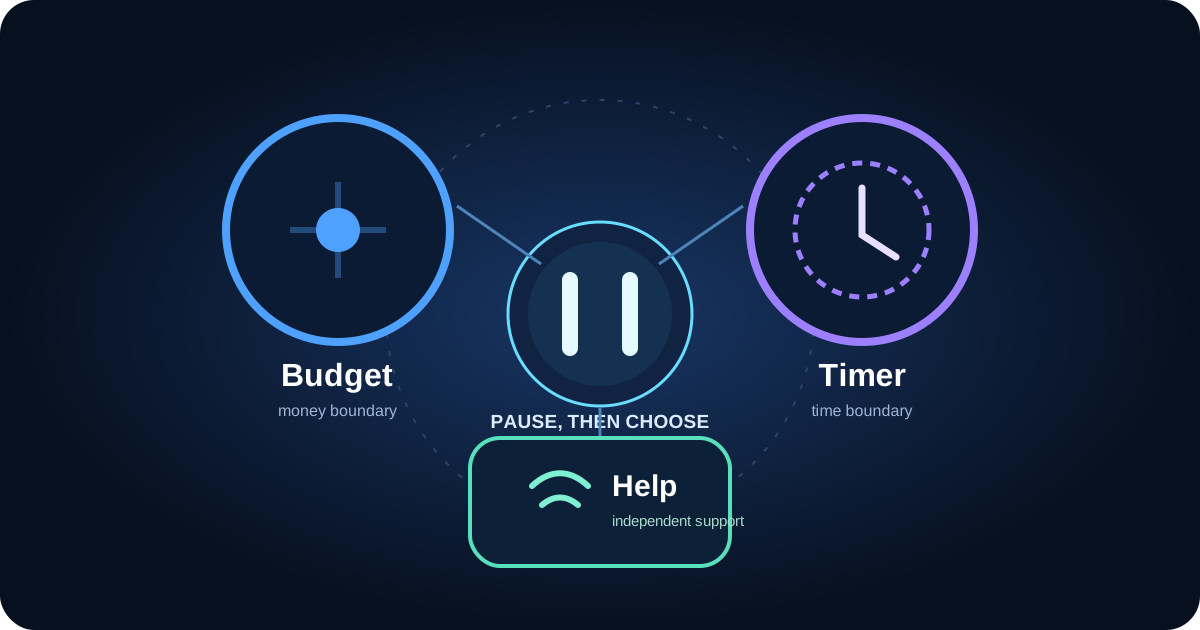
You can talk before the problem becomes a crisis
You do not need to wait for a particular loss or decide whether the situation is serious enough. Independent support can begin with a conversation about what is happening and what you want to change. People affected by someone else’s gambling can seek help too.
Gambling Help Online
Visit Gambling Help Online or call 1800 858 858. Its free, confidential support is available 24/7. You can use the service to discuss your own gambling or the effects of another person’s gambling on your life.
Gambler’s Help
Gambler’s Help provides another Australian route to gambling support. Explore its information about getting help and choose the contact option relevant to you.
More Australian resources
Further information is available through Gaming Care, healthdirect and GambleAware NSW. Check each resource’s service area and purpose.
Make the next impulsive deposit harder
Create a pause between an urge and easy access. Consider removing shortcuts, reducing gambling-related messages and asking your bank about any gambling-payment controls it offers. These practical steps can support an account restriction, but they do not confirm that an operator has applied one. Follow up the account request separately.
For family and friends
You can get help for the effect on your own wellbeing and finances. Explain the changes you have seen and how they affect you, rather than debating the likelihood of a future win. Support for you remains available even if the other person is not ready to talk.
Account controls sit with an offshore operator
Twin Casino is described in the brand material with Anjouan licence ALSI-202410001-FI1. This is not an ACMA licence. Changes to a Twin account need to be requested from the operator; Australian support services offer independent help with gambling concerns and their wider effects.
Ask for confirmation
If a control is unclear or unavailable on screen, contact help@twin.com. Specify the restriction you want and ask about activation, duration and reopening conditions. Save the reply so you can check that the confirmed restriction matches the request, including any waiting period that applies.
Keep independent help alongside it
An account setting addresses one part of the situation. Support can also help you consider spending pressures, relationships and the circumstances that lead to gambling. Keep independent contact details accessible while you arrange a restriction, rather than waiting until every account step is complete.
Responsible gambling questions
Is Gambling Help Online 24/7?
Yes. Gambling Help Online offers support around the clock, including the telephone route on 1800 858 858.
Does Australian self-exclusion close Twin?
Do not rely on that assumption. Request exclusion directly from Twin and check the written confirmation of its scope.
Can I lower a deposit limit immediately?
Ask when the lower limit becomes effective. The account’s current rules and the confirmation of the change determine its timing.
Is help confidential?
Gambling Help Online provides confidential support. You may ask how it handles your information before sharing personal circumstances.
Age limit?
Gambling participation is for adults aged 18+. Support information is also relevant to other people affected by someone’s gambling.